June 29, 2026
Dina Al Mahdy
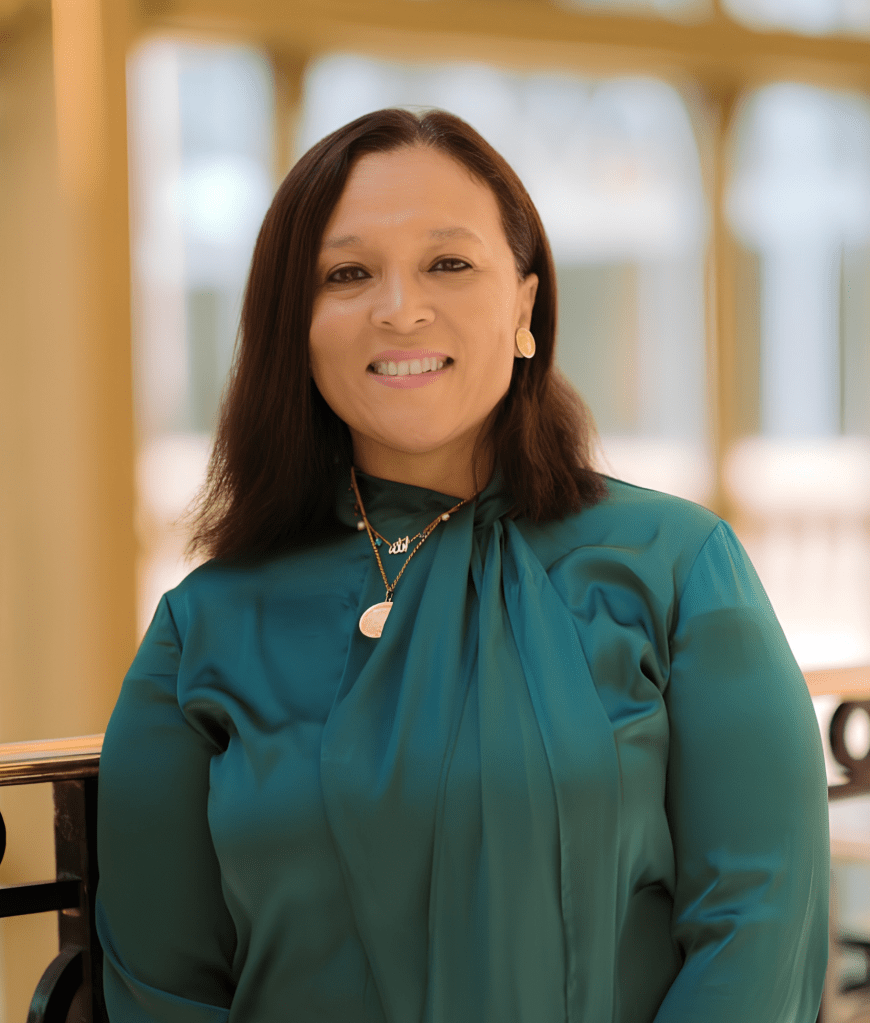
Mennat-Allah Sharkas, the General Manager of LIPTON Teas and Infusions in Egypt, exemplifies what it means to lead with purpose and commitment. She upholds the values of quality that have long defined the LIPTON brand that carries a proud legacy spanning over a century. Under her stewardship, the Dutch based company, rooted in Egyptian culture, remains dedicated to providing consumers with the finest teas, meticulously crafted with care, precision, and innovation.
Mennat leads a passionate team that embodies excellence, ensuring that LIPTON brand remains a trusted name in households across Egypt.
Mennat’s impressive career spans over 27 years in the Fast-Moving Consumer Goods (FMCG) industry at Unilever and LIPTON Teas and Infusions. Throughout her journey, she has held various leadership roles in general management, sales, business development, and financial management. Her extensive experience has provided her with valuable insights across more than 25 markets in Asia, Africa, and Eastern Europe, honing her skills in customer management, shopper insights, and distributor management. Mennat’s extensive career has enables her to manage diverse team with high level of values that shaped a winning culture across her different roles.
Her contributions have not gone unnoticed. In 2018, Mennat was recognized as one of Egypt’s Top 50 Most Influential Women in Business by Amwal Al Ghad Magazine. More recently, in 2025, she received the “Best in Business” award from the General Union of Afro-Asian Investors, a testament to her influence in the Egyptian economy.
WoE: After more than 26 years in the FMCG industry, what still excites you most about leadership and business today?
Mennatallah Sharkas: Honestly, what excites me most hasn’t changed; it’s people. After all these years, I still get a genuine thrill from watching someone on my team discover a strength they didn’t know they had, or seeing a market respond to something we built together. Business strategies evolve, products change, markets shift, but that human element never gets old. Leadership, at its core, is about managing, empowering, and growing people. That’s what I show up for every single day.
WoE: You’ve worked across more than 25 markets in Asia, Africa, and Eastern Europe. How did these diverse cultural experiences shape your leadership personality?
MS: Every market taught me something I couldn’t have learned in a classroom. I learned humility in markets where I was the outsider who had to listen before speaking. I learned resilience in markets where the rules changed overnight. And I learned that people, regardless of culture or geography, fundamentally want the same things: to be heard, to be trusted, and to contribute to something meaningful. Working across 25+ markets didn’t just shape my leadership style, it dismantled any rigid ideas I had about what leadership was supposed to look like. Today, I lead with curiosity rather than assumptions, and I think that makes all the difference.
WoE: Throughout your career at Unilever and now Lipton, was there a moment where you felt you had to work harder than others to prove yourself as a woman leader?
MS: I’ve been very fortunate in that the men around me throughout most of my career evaluated people on performance and merit, not gender. So I always felt valued for what I delivered. But I won’t pretend the broader environment was always that straightforward.
There were absolutely moments; rooms I walked into where the default assumption wasn’t that I belonged there. And in those moments, yes, you feel the weight of having to prove yourself. What I’ve come to believe though is that the answer isn’t to work yourself into the ground trying to “earn” a seat. The answer is to know, deeply know, that you already belong there. You are enough, exactly as you are.
WoE: You are known for leading with passion and energy. How do you keep your teams motivated during periods of uncertainty or market pressure?
MS: I’m very honest with my teams during hard times. I think people can feel when leaders are putting on a brave face, and it actually does the opposite of motivating them. What I try to do is acknowledge the pressure, name it, and then redirect the energy toward what we can control. I also try to remind people of the bigger picture. At Lipton Teas and Infusions Egypt, for example, when things get tough.
I remind the team that we’re not just selling tea, we’re part of a daily ritual in nearly every Egyptian home. That sense of purpose is a powerful anchor. Beyond that, I genuinely invest in the energy of the people around me. When your team feels seen, they find reserves they didn’t know they had.
WoE: Looking back, what was the most difficult transition or role change in your career journey, and what did it teach you about yourself?
MS: Honestly, it was the first time I had to travel abroad for work. It wasn’t something I sought out or was chasing after, it was something my company pushed me into, and I remember resisting it. I wasn’t ready, or at least I thought I wasn’t. But once I was there, in an unfamiliar place, working with people from completely different backgrounds and ways of thinking, something started to shift. I had to learn how to adapt, how to find common ground with people I had nothing obvious in common with. The woman who came back was not the same woman who left.
That experience cracked me open in the best possible way. It taught me that growth rarely announces itself politely, it usually arrives as something uncomfortable that someone else believed you were ready for before you believed it yourself.
WoE: As someone who has continuously stepped outside her comfort zone, how do you personally deal with fear before making a major professional move?
MS: I feel the fear; I don’t try to suppress it or pretend it isn’t there. For me, fear is actually information. It tells me that something matters, that the stakes are real. What I’ve trained myself to do is separate the fear from the decision. I ask: is this fear protecting me from genuine risk, or is it just the discomfort of the unknown?
Most of the time, it’s the latter. And once I make that distinction, the path forward usually becomes clearer. I also think about the cost of not moving, staying comfortable has its own risks, and those are often the ones we don’t talk about enough.
WoE: In fast-moving corporate environments, how do you protect your personal identity and well-being outside of work?
MS: A few things, and none of them happen by accident. First, planning. I am a firm believer that if you don’t structure your life intentionally, work will fill every available space. So I plan, everything has its place. Second, my support system. And I mean that broadly, it’s not just family, it extends to neighbors, friends, the people in my everyday life who keep me tethered to who I am outside of a job title. That network is everything.
Third, mindset. You have to be deliberate about what you prioritize, because you genuinely cannot do it all, and pretending otherwise is a trap. And finally, I protect time for myself. I love to walk. There’s something about moving through the world at a human pace, without an agenda, that clears my head like nothing else. That time is non-negotiable for me. It’s where I come back to myself.
WoE: You’ve been recognized among Egypt’s most influential women in business. Did success change your relationship with ambition or pressure?
MS: Success definitely shifted something. When you’re still climbing, ambition feels like fuel; urgent, almost hungry. Once you reach a certain level, it becomes something quieter and more purposeful. My ambition today isn’t about the next title or the next milestone. It’s about impact. What kind of leader am I modeling for the women coming up behind me? What doors am I helping to open?
The pressure, interestingly, didn’t disappear with success; it just changed shape. There’s a responsibility that comes with visibility, and I feel it deeply. I want to use that visibility well.
WoE: What does female leadership mean to you today, especially in multinational corporate environments?
MS: To me, female leadership isn’t a category, it’s just leadership. Women are not “almost there” or “getting there.” We are enough, right now, with everything we bring to the table. What I do believe is that diverse leadership, in gender, in background, in perspective, makes organizations genuinely smarter and stronger. In multinational environments especially, the companies that get this right aren’t doing it as a PR exercise; they’re doing it because they understand that inclusion is a competitive advantage.
At Lipton Tea and Infusions Egypt, we have women representing 50% of our board, and I see the difference that balance makes in the quality of our decisions every day.
WoE: How do you see the “glass ceiling” still affecting women’s career progression in the corporate world today, and what structural changes are most urgently needed to break it?
MS: The glass ceiling is real, but it’s not the same everywhere. In some organizations it’s explicit; in others it’s embedded in systems and cultures that weren’t designed with women in mind. Hiring biases, meeting dynamics, sponsorship gaps, the unspoken expectation that women prove themselves twice over. The structural changes that matter most, in my view, are the ones that address the systems rather than just the symptoms. Equal pay audits. Transparent promotion criteria. Sponsorship programs. not just mentoring, but active sponsorship where leaders put their names behind women’s advancement. And perhaps most importantly, creating cultures where men see gender equality as their cause too. This is a shared responsibility. It always has been.
WoE: Outside of boardrooms and business targets, what are the moments in life that bring you the greatest sense of peace and fulfillment?
MS: The quiet ones, honestly. Not the big ceremonies or the public recognition, though those are meaningful, but the small, human moments. A genuine conversation. A meal with people I love.
The feeling of having been useful to someone in a real way. I find a lot of peace in those moments of connection that have nothing to do with performance or output. They remind me of what all of this is actually for.

