Egypt Never Leaves You
April 27, 2026
WoEgypt
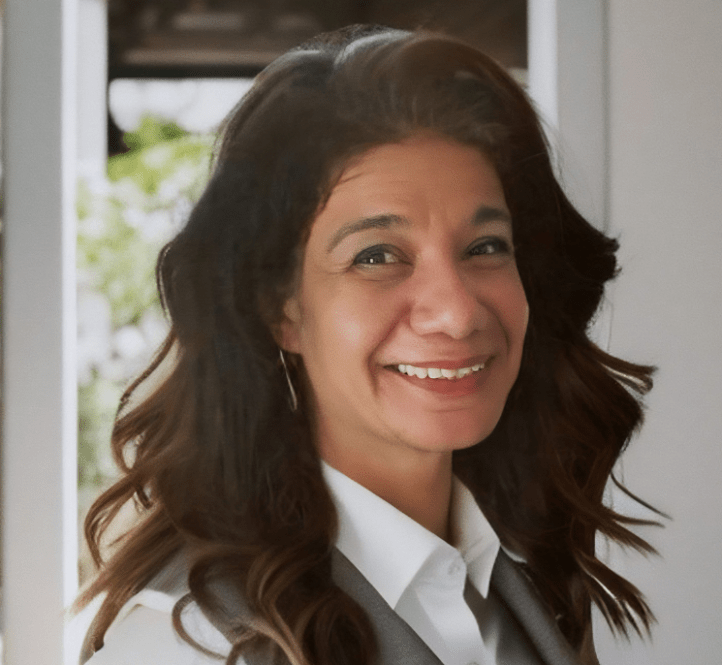
Afaf Abou El Kheir-Steiert is the founder and owner of Afaf Translations LLC, a foreign language services provider. She also works as a contract Arabic–English interpreter. She was named one of the Top 30 Women in the Language Industry by Multilingual magazine. Afaf moved to California at the age of 24 and has lived in the United States with her family ever since.
WoEN: What were the greatest challenges raising children in the USA?
AS: Raising children in the US while being a protective Egyptian mothers is a little bit like clashing together two cultures: there are issues such as earlier independence of children, having and promoting self confidence, etc. I found many challenges in Middle and High School where there is a lack of real supervision in the public school system, then plenty of peer pressure starting already on the playgrounds of elementary schools; while meeting with non-Arabic speaking families gathering on a regular basis. In school sports there is such a heavy focus on pushing students to making their “own independent” choices, sometimes without requesting the parents’ permission; after all this is very dangerous type of sport.
WoEN: Do you feel it is important to maintain the Egyptian identity/heritage? What do you do to achieve that?
AS: I spoke Arabic to my child from birth, and from the age of five, got him Arabic school books to learn the language. My child visited Egypt and my family every school summer holidays throughout his entire school years. Visiting Upper Egypt, e.g., Luxor and Aswan to know ancient Egyptian history provides necessary significance of Egyptian culture and history. And of course, very important is to connect with relatives and Egyptian families living inside of Egypt, besides connecting to those who live abroad like ourselves. My child is proud of being able to speak Arabic fluently, understanding Egyptian jokes and conversational nuances and having a good sense of the Egyptian Heritage.
I also watch Egyptian television, movies and series. Greatly fond of old black and white movies, as well as old songs. In addition I love to cook Egyptian food to my family, best and most beloved Molokyia and Bamia.
We also celebrate Egyptian holidays, when possible we take time off from work during Egyptian holidays. Also, we travel to Egypt during some Egyptian holidays to make those holidays more memorable.
I visit Egypt every year. Now I am even able to stay there much longer with family. My mom used to visit every year; always a good memory to have family visiting from Egypt.
WoEN: Describe your feelings when you see the Egyptian flag or hear the Egyptian anthem, or music?
AS: I often heard the Egyptian anthem and Egyptian flag when visiting the Egyptian Consulate in San Francisco at their events and always felt the warmth of my home, proud and grateful to be raised up in Egypt. Remembering the positive vibes and good moments and our role in the US as Egyptian ambassadors abroad.
WoEN: Tell us about a moment or an event that made you feel proud of being an Egyptian.
AS: Through my work as an interpreter I feel proud helping others understanding the difference between cultures. In my work, when Egyptian delegates visit, it makes me feel that my family is visiting and get I also get updated on all the latest songs and jokes, and when the visiting delegates are from different Arab countries, the Egyptian women make me proud of how open-minded Egyptian can be. I like to be helpful and promote cultural understanding during those assignments. Seeing the new younger generation in how they are educated and behave makes me proud of being Egyptian.
WoEN: If you would meet an Egyptian official, what would you like to ask him/her?
AS: I would ask the Ministers of Education and Environment, along with the Governor of Alexandria: why isn’t greater importance placed on teaching children in schools about the value of nature and ecosystems for our health and well-being? Why is there so little education around plastic use, recycling systems, and maintaining cleaner environments?
And more broadly, why has Alexandria become one of the least clean cities in Egypt? Other areas, even smaller destinations like Fayoum or Ras El Bar, seem to be doing a far better job.
WoEN: Is there anything else you would like to add
AS: I am honored to be highlighted during the women month in Women’s of Egypt. Some will wonder how the entire country and its people at all levels stand strong in the face of all the storms of economic hardships, epidemics, political changes, etc. The reason is because every Egyptian woman is a strong pillar at her home to keep all together throughout life.
Living abroad for so many years, away from Egypt, has never lessened how much I miss home, especially during difficult times. As expats, we always need to feel that connection to our motherland, Egypt, as a source of warmth and comfort—a feeling I rediscover every time I return.
Being embraced by Egypt gives us strength, helps us respect ourselves and others, and empowers us to adapt and move forward together in the right direction.

