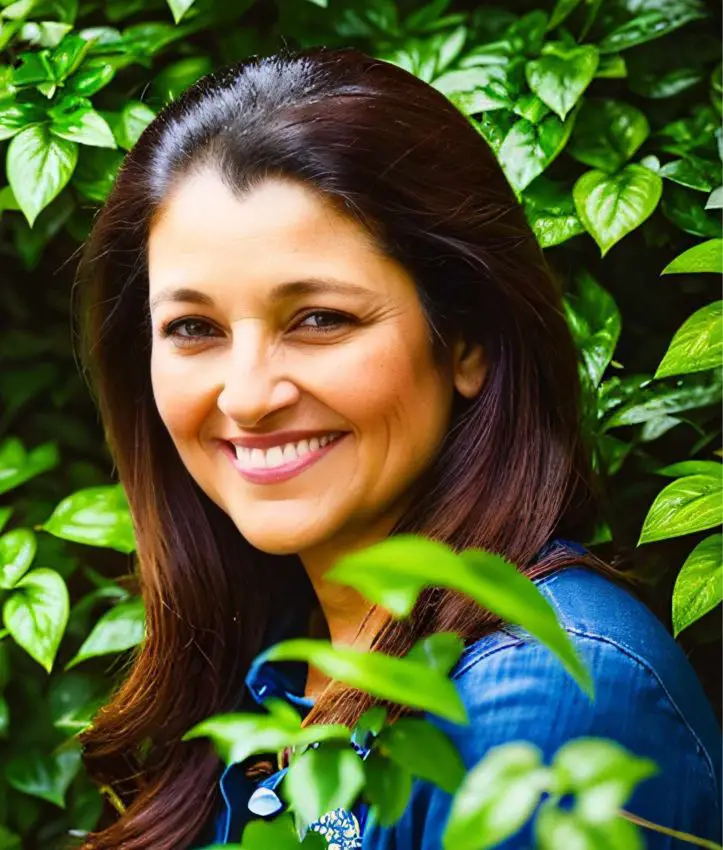
Abeer El Gharabawy is an instructor at Lourdes University and Owens Community College in Toledo, Ohio, earned her Bachelor’s in Geology from Cairo University. In 1993, at the age of 29, she moved to the USA to pursue a Master’s in Geology at the University of Toledo.
Her academic focus later shifted to Pharmacy, where she joined the Medicinal and Biological Chemistry program at UT with her Master’s credentials. Following her Ph.D., she conducted research as a Post-Doctoral Fellow at UT-MC, where she published numerous papers. Currently, she teaches Anatomy and Physiology, Microbiology, Pathology, and Medical Terminology to higher education students. Abeer is most proud of her academic achievements, especially her Ph.D. and work in cancer research, as well as publishing.
As a child, Abeer lived in Florida with her parents, where her father pursued his Ph.D., and it became one of her goals to return for higher education. When she first moved to the US, she faced many challenges. She was alone, and missed her friends, family, and country. She also experienced financial burdens. Life in the demanding American environment left little time for socializing or making new friends. The weather in Ohio was also a challenge.
Abeer married in the USA and raised her daughter away from the much-needed help of her family. Religion also played a role, but fortunately, she found many others of her own religion who helped her along the way.
The biggest differences she’s noticed between life in Egypt and life in the USA, Abeer highlights several contrasts. In Egypt, she notes a strong sense of daily interconnectedness among people, centered around religion and strong family bonds. Work is less hectic, food is healthier, and costs are generally lower. On the other hand, life in the USA revolves around work, with higher stress levels, less focus on family and traditions, and challenges in forming close friendships. Abeer also observes American society as more materialistic compared to Egypt.
She celebrates Egypt’s customs and cultural heritage, which she values even more since leaving. She celebrates Ramadan, Sham El Nessim, Eid El Adha, and Eid El Fitr. Beyond these celebrations, she keeps in touch with family, reading Arabic books, and engaging in various cultural practices.
Abeer’s only daughter, Aliah Richter, aged 27, is currently pursuing her second degree in Law at Ohio State University. She has some proficiency in understanding and speaking Arabic.
Being Muslim, the greatest challenges Abeer faced in raising her daughter were finding her good private schools that recognized religion as part of her life. Her daughter went to Montessori as a child and Notre Dame Academy in high school. She continuously instilled in Aliah the importance of her cultural heritage while giving her the freedom to choose and decide. Despite the many temptations readily available for youth in the USA, her daughter was mature and recognized the path she needed to take to succeed.
Abeer believes in the importance of maintaining Egyptian identity and heritage. She tries to be a role model, emphasizing the importance of behavior and attitude. Abeer preserves traditions and culture by regularly visiting Egypt and reaching out to Egyptians in the USA. Additionally, she uses Facebook to keep up with news and stay connected with her cultural community.
To stay connected with Egypt, in addition to celebrating Egyptian holidays, Abeer watches some Egyptian TV, cooks Egyptian food and visits Egypt twice a year.
A proud Egyptian, Abeer feels nostalgic and overwhelmed with emotions of pride and longing for Egypt when she sees the Egyptian flag, hears the Egyptian anthem, or listens to Egyptian music. When Abeer hears of Egyptian achievements abroad, like winning international athletic medals, she feels empowered and proud. She also takes pride every time she reads about the accomplishments of Ancient Egyptians, especially in medicine, wisdom, and engineering.
As an Egyptian woman living in the US, Abeer faced some cultural and societal challenges, “but not to a crippling point,” she says. She navigated these challenges by voicing her opinions and setting her limits, which were met with understanding and respect. “For instance, I don’t drink or go to bars,” she explains.
She has also encountered stereotypes or misconceptions about Egyptian women. These stereotypes often revolve around the hijab and portray women as voiceless or powerless to men. She addresses these myths by presenting herself and highlighting the achievements of other women.
Reflecting on her life in the USA, Abeer highlights two significant experiences. Raising her daughter to embrace both Egyptian and American cultures has been deeply rewarding. She believes her daughter has benefited greatly from the blend of these two worlds. Another significant moment was becoming a citizen, a day where she felt both cultures contributed to her success.
She believes it is important for new immigrants to integrate into society and understand the American system to survive. Abeer advises immigrants not to isolate themselves, refuse to speak English, or raise their children in isolation, otherwise they will fail to thrive. She notes that Americans are welcoming to many cultures and respect different values, but they don’t understand why other cultures do not want to be a true part of their society. Therefore, immigrants must embrace American lifestyles that resonate with their own values and beliefs.
Abeer also advises other Egyptian women who are considering moving to or currently living in the USA to carefully consider their future. It becomes harder to return to Egypt as one becomes more established in the USA. There will be times when they miss Egypt and times when they will lose friends and family. They should ask themselves if coming to the USA is worth it and ensure they can face tremendous challenges alone. Strength and self-reliance are crucial in this journey.
“Many of us decide to go back. My personal experiences were difficult. Despite achieving many milestones that I am proud of, Egypt remains in my heart as my home. I see myself as in-between Egypt and the USA in many aspects, but when it comes to family, religion, and culture, I am 100% Egyptian. I have dedicated many years to working in the USA, and I continue to work for this country with loyalty. I deeply appreciate all the opportunities and the wonderful people here in the USA who have supported me. The same sentiment applies to Egypt—I love both countries dearly,” she concluded.
 Women of Egypt Network