
October 2, 2026
Hannah Edwar
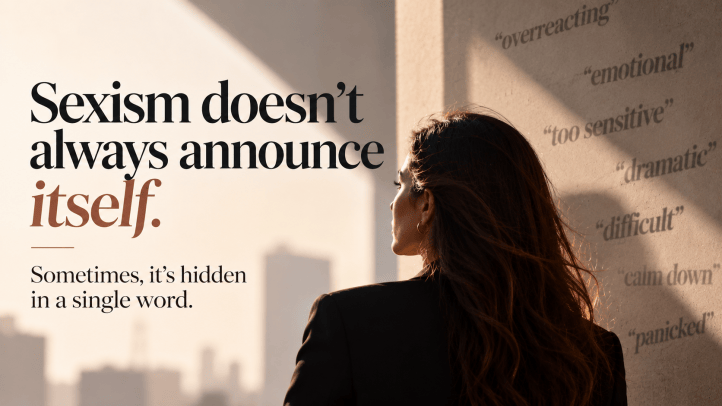
Sometimes, it’s hidden in a single word. A passing comment. A choice of language that makes you stop for a second and think: There it is. I had one of those moments recently.
I was speaking to an external agency that had made a mistake with something they were producing for us. We had approved a colour sample, yet what was eventually delivered was still wrong.
So when discussing the next delivery, I was very clear; trust had been affected. I needed the materials earlier because I could no longer guarantee that what arrived wouldn’t need to be redone.
A mistake had happened. The consequence of that mistake was reduced confidence. Reduced confidence required additional time for quality control. Pretty straightforward.
Except somewhere along the way, the conversation stopped being about the work and became about my reaction to it. I was “overreacting.” My response was described as “panicked.” And I was told that they wouldn’t deliver earlier simply to “put my mind at ease.”
Suddenly, a professional decision based on experience had been reframed as an emotional need that needed soothing.
And women know this language because we hear versions of it everywhere.
- Set a boundary and you’re “dramatic.”
- Object to an inappropriate joke and you’re “too sensitive.”
- Know exactly what you want and you’re “difficult.”
- Sense that something isn’t right and you’re “overthinking.”
- And, of course, there’s the old favourite; calm down.
Let’s put aside, for a moment, the double standard behind these labels: a woman is emotional; a man is passionate. She is difficult; he has high standards. She is overreacting; he is managing risk. She has a “feeling”; he has judgment.
Because the real problem with hearing these things over and over again is that, eventually, we can start dismissing ourselves.
Women are so frequently told that our reactions are irrational, emotional or exaggerated that we learn to second-guess the very instincts that are trying to tell us something.
- We stay in relationships that don’t feel right because maybe we’re reading too much into it.
- We miss out on opportunities because we don’t have enough “proof” yet.
- We allow a colleague to keep pushing the boundaries of our role because we don’t want to be difficult.
- We tolerate behaviour that makes us uncomfortable because perhaps we’re being too sensitive.
Instead of trusting that gut feeling we shove it deeper then wonder why our mental health takes a hit. And that’s the part I think we talk about far less.
Intuition isn’t the absence of logic. Very often, it is experience working faster than we can articulate it. It’s your brain recognising a pattern before you’ve consciously put all the pieces together.
That doesn’t mean intuition is always right, but then again neither is logic. But perhaps women need to become a little less afraid of being accused of overreacting, and a little more comfortable trusting the information our own experience is giving us.
Because sometimes she isn’t being dramatic,
she isn’t panicking and she doesn’t need to calm down. She just saw the red flag before you did and you should follow her lead.
Hannah Edwar is a Director of Marketing & Communications @PwC ETIC


Well said. We begin internalizing these sexist experiences at such a young age & were conditioned to normalize it. But naming it – like you’ve done so well here – empowers us toward collective awareness and action, and helps equip the next generations to stop it in its tracks.
LikeLike