
Part I: “Wahawy ya Wahawy”
February 24th, 2026
Dr. El-Shaimaa Talaat Abumandour
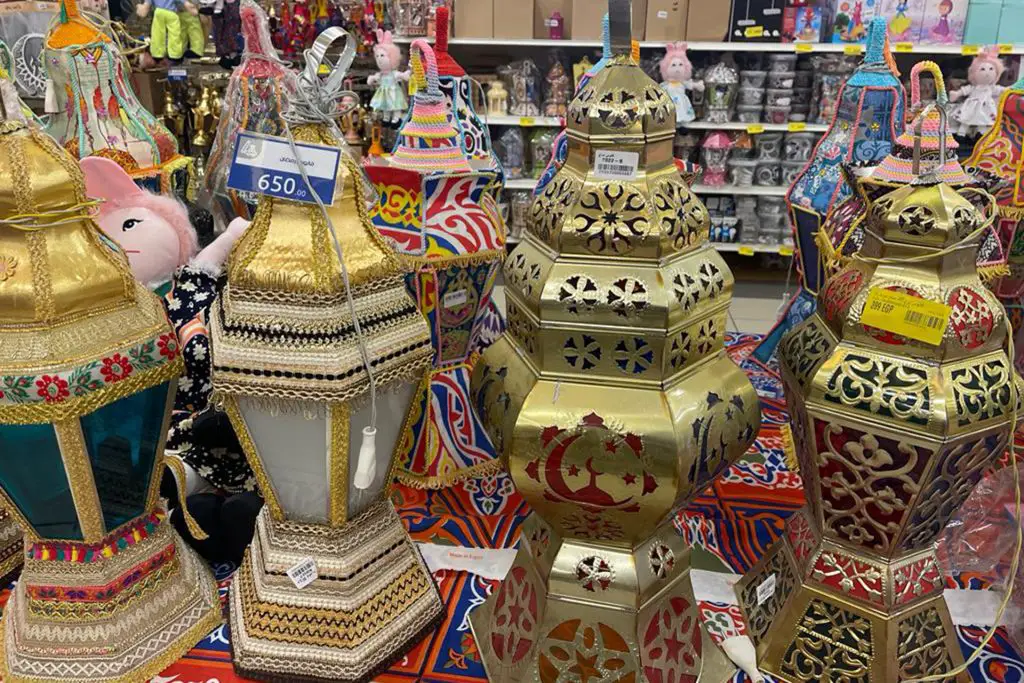
The holy month of Ramadan is approaching, bringing with it spiritual inspiration and blessings. Egyptians have always been very devoted and sentimental; they always cherish Ramadan as a distinguished month in the year. They have been and are still celebrating this month with religious rituals and plenty of diverse traditions, artistic production, sports tournaments, and gatherings. In these articles, we will navigate deeper into history and will try to find an answer to this question: do the celebrations of Ramadan have any common and deeper origin from the ancient Egyptian civilization or not? So, let us start our journey.
Ramadan has many religious devotions; the main ones are fasting and praying. Doing good deeds, helping others, and charity are indeed desirable rites during the holy days. All of these rites are commonly practiced during Ramadan by Muslims all over the globe. In Egypt, Ramadan is a noticeably unique and special time of the year. All the mentioned religious rites are done in a fascinating spiritual atmosphere; in every street, neighborhood, city, and district, you can feel it.
Usually, Egyptians begin Ramadan preparations before the holy month starts. Preparations start with decorating streets, houses, balconies, and mosques’ frontages with “Fawanis Ramadan”. Lanterns are spread in the streets and with children. The word “Fanous” or “Fanoos” initially originates from the Greek word “Phanos” (φανός), pronounced almost the same, which means light or portable or fixed means of illumination. Originally, “Fanous” was made of copper, metal, and colored glass and lighted with candles. Nowadays, modern “Fawanis” are made of different materials such as copper, metal, and plastic, and could play music and light up with lamps and represent cartoons and famous beloved Egyptian figures.
There are various stories and folk tales surrounding the era of the “Fanous” appearance and the way it was used. One of the well-known stories goes that Egyptians went to welcome the Fatimid Caliph “Al-Mu’izz li Din Allah” who arrived in Cairo on the fifth day of Ramadan in the year 362 AH (June 973 AD). They went in a huge parade and welcomed him with lit torches and colorful ornamented lanterns to guide and light his way since he had arrived at night. Another story refers to the origin of the “Fanous” to one of the Fatimid caliphs who wanted to light up Cairo streets during the month of Ramadan. The caliph ordered all the mosques’ Imams to light lanterns with candles inside and hang them to light the streets. In the history of the Fatimid era, it was known that women were not allowed to walk alone in the streets except in the holy month of Ramadan. Women were allowed to walk accompanied and led by a little boy carrying a lantern to alert others that there was a woman passing by and to keep a distance. After women were granted the right to walk freely in the streets, people kept the nice tradition of children walking with the “Fanous” and singing folk songs.
Since then, the “Fanous” has become a symbol of joy, hope, peace, and illumination and an adored tradition in the holy month of Ramadan. Furthermore, historical studies and folklore have rooted the use of lanterns and light during celebrations to ancient Egyptians. From all the above stories and more in history, all stories agree that the Egyptians were the first to make and use the “Fanous” and spread it all over the Arab countries and the Muslim communities worldwide.
Kids used to sing folk songs while walking with the “Fanous” in the streets. One of the well-known loveable songs is “wahawy ya wahawy”. The poet “Hussein Helmy Al-Manstrali” who was born in 1892, wrote this song. The song was originally composed by Ahmed El-Sherif and sung by singer Ahmed Abdelkader. Many linguists stated that the two words “wahawy” and “ayah” or “ayouh” originated from the ancient Egyptian Pharaonic language. The word “wahawy” means in hieroglyph gold and “ayah” or “ayouh” means moon. It could mean, “Shining moon” or “what a shining moon” and this because Egyptians greet the holy Ramadan crescent. Another story confirms that these words were used by ancient Egyptians to greet the beautiful queen “Ahhotep I”, the mother of the king “Ahmose I”, who is very famous for his decisive victory over the Hyksos. The queen’s name means, “the moon is satisfied”, and the king’s name means “the moon is born”. This is why the ancient Egyptians used to greet the queen with these words. After decades, Egyptians used these words to greet the start of the holy month and the appearance of its crescent in the sky. Since the broadcast of the original song, many old and modern famous singers have sung this song with many changes in melodies, adding lyrics and music. The famous singers Sabah, Mohamed Mounir, and others sang “Wahawy ya Wahawy” to greet the holy month using these folkloric lyrics.
The holy month of Ramadan always brings joy, peace, and blessings to all of us, carrying adorable memories and customs. Accordingly, stay tuned for the upcoming articles to unveil some of these cherished memories and discover their origin.
 Women of Egypt Network