Feb 6, 2025
WoEgypt
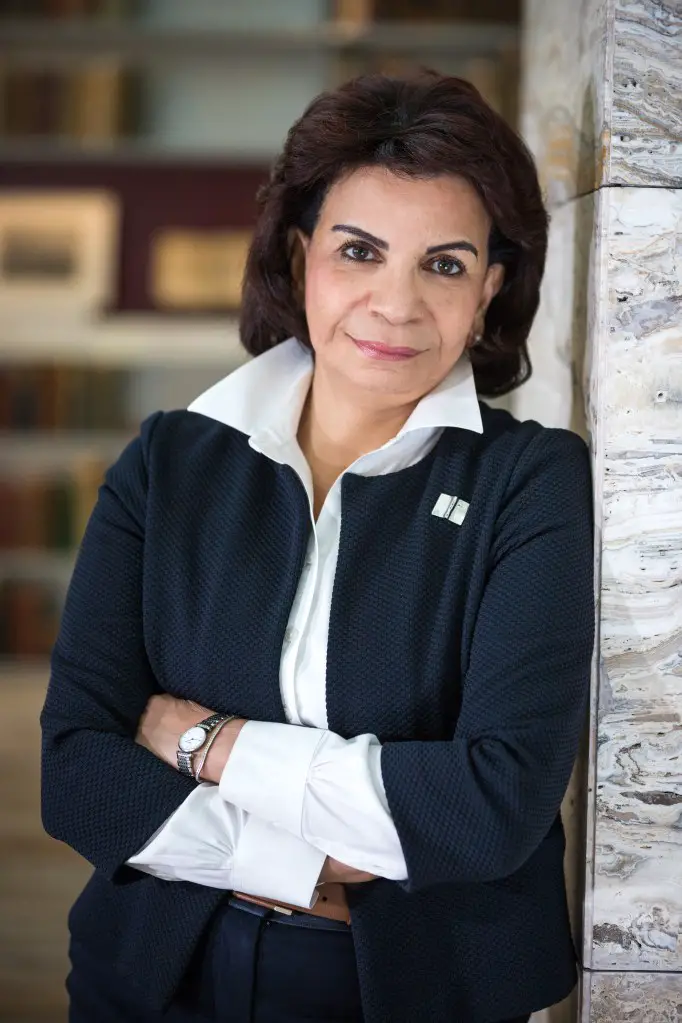
Dr. Soheir Wastawy has more than 40 years of international library and university management experience in the Middle East and the US, and has practiced and taught librarianship in Egypt, Saudi Arabia, and the US.
Dr. Sohair Wastawy is former Executive Director of Qatar National Library. She had also worked as Dean of Libraries at Florida Institute of Technology. She held the position of Dean of University Libraries at Illinois State University, and was the first Chief Librarian for the new Bibliotheca Alexandrina in Egypt. Dr. Wastawy also served as Dean at Illinois Institute of Technology in Chicago.
As well as her work in library management, Dr. Wastawy has worked as a consultant to many not-for-profit organizations, corporations, and accreditation commissions, and has been the recipient of international awards, including a Peace Fellowship and a Fulbright Scholarship.
Dr. Wastawy began her library career at Cairo University Library, Egypt, and taught librarianship in the first women’s library program in Saudi Arabia. She holds a Doctor of Arts in Library and Information Management from Simmons College, Boston, MA; and a Masters in Library and Information Science from The Catholic University of America, Washington, DC.
WoEN: How old were you when you moved to the US? How long have you been in the US?
SW: I was 27-years old. I have been in the US for 43 years, a US citizen for 34 years — a dual citizenship I value.
WoEN: Can you share a bit about your journey from Egypt to the USA? What motivated you to move to the USA? What were some of the challenges you faced during this transition?
SW: I transitioned from my initial field of study in Linguistics to the library and information profession. I was fortunate to receive a scholarship for my master’s degree at the Catholic University of America. After completing my degree, I applied to several doctoral programs and decided to enroll at Simmons College in Boston, Massachusetts. At the time, I had no intention of staying in the U.S. and returned to Egypt when I completed my degree; however, I returned in less than a year later after marrying an Egyptian American citizen.
The challenges I faced were significant. They began with adapting to the different approach of the American academic system and extended to navigating the complexities of being a double minority in an executive position.
WoEN: What aspects of Egyptian culture do you maintain or celebrate while living in the USA?
SW: I have certainly preserved many of the cultural traditions I was raised with. These include celebrating holidays, preparing traditional meals, maintaining customary social interactions, using my native language in speaking, reading, and occasionally teaching, nurturing family relationships, and practicing my religion.
WoEN: If you have kids, how many are they? Please introduce them: age and profession. Do they speak Arabic?
SW: I am the proud mother of a 33-year-old son who is an engineer. Although born and raised in the United States, my son speaks the language of his heritage and actively incorporates many cultural elements into his life.
WoEN: what were the greatest challenges, if any, that you faced in raising your kid, in school, sports, playgrounds?
SW: The greatest challenge I faced was the absence of close family support. Raising a child without the collective effort of grandparents, uncles, aunts, and cousins and the roles they play in a child life, added an immense strain. As a working mother, trying to fulfill all those roles alone was not only demanding but practically impossible.
WoEN: What do you do to make your kid proud of the Egyptian heritage?
SW: Although I took my son to Egypt numerous times, it wasn’t until adulthood that he truly began to appreciate his heritage. I was particularly pleased when he incorporated Egyptian foods and music into his wedding without any recommendation on my part to do so.
WoEN: Do you feel it is important to maintain the Egyptian identity/heritage? If the answer is yes, what do you do to achieve that?
SW: Yes, our heritage and roots play a pivotal role in grounding us and helping us understand our place in the world. They provide a vital foundation for our identity and sense of self, fostering a deeper sense of belonging within both our community and the wider world. Maintaining cultural traditions is how I strive to achieve this.
Unfortunately, Middle Eastern culture is often misrepresented or stereotyped in the media. By embracing and celebrating our heritage, we can challenge these misconceptions and reclaim our narrative. This not only highlights the richness, complexity, and diversity of our culture but also allows us to express pride in who we are and where we come from.
WoEN: Do you watch Egyptian television?
SW: No, I am not much of a TV person, mostly a reader.
WoEN: Do you cook Egyptian food?
SW: Certainly.
WoEN: Do you celebrate Egyptian holidays?
SW: Yes, I even make kahk every Eid and share with my American friends and neighbors.
WoEN: Do you often visit Egypt? Do your family members from Egypt come to visit?
SW: Yes, I visit every couple of years and my siblings also visit when possible. Five members of my family members traveled over here for my son’s wedding.
WoEN: Describe your feelings when you see the Egyptian flag, or hear the Egyptian anthem, or music.
SW: While the flag and anthem symbolize the country, they don’t evoke strong emotions in me. However, old music, like the timeless songs of Umm Kulthum, moves me profoundly. I also continue to read the works of Arab writers in Arabic and English.
WoEN: Can you share (story, moment or event) about a time when you felt particularly empowered/proud/ or inspired as an Egyptian woman living in the USA?
SW: I don’t see myself simply as an Egyptian woman living in the U.S. Instead, I view myself as an amalgamation of various identities seamlessly woven together. My Egyptian cultural traditions, my American life, my political beliefs, my international outlook, and my roles as a woman, a mother, and an educator all coexist harmoniously, working together in balance and peace. Out of the many, one.
WoEN: What are some of the biggest differences you’ve noticed between life in Egypt and life in the USA?
SW: Family ties are deeply significant in Egypt. We are often willing to go to the ends of the earth for a family member. While some families in the U.S. share similar bonds, this level of commitment is far more common in Egypt than in the U.S.
WoEN: Have you faced any cultural or societal challenges as an Egyptian woman living in the USA? How have you navigated these challenges?
SW: The events of 9/11 and the subsequent Iraq War caused significant distress for people of Middle Eastern origin. I was frequently asked about topics such as gender roles and the contrast between traditional family expectations and American individualism. Navigating this complex social landscape—and resisting the feelings of being “othered” or misunderstood—required me to engage in difficult and often uncomfortable conversations.
In my role as dean of libraries, I had the privilege of being able to host events that facilitated these important discussions. Additionally, I have always volunteered to be a foreign student advisor, helping ME students combat feelings of isolation and navigating the complexities of these situations.
WoEN: Can you share a memorable experience that highlights the intersection of your Egyptian identity and your life in the USA?
SW: Before my son’s wedding, I hosted a small party for him and his fiancée. When considering gifts for this pre-wedding celebration, I decided to pass down some family heirlooms, purchase the traditional handkerchief used in Egyptian weddings, and prepare elaborate meals to host them and their friends. Egyptian wedding songs were played alongside a selection of American music.
WoEN: What accomplishments or successes are you most proud of since moving to the USA?
SW: I am extremely fortunate to have been quite successful in my field. At my first job, I have rebuilt a large academic library from the ground up which has helped my university attain its complete accreditation. I have also introduced some of the earliest technologies for the first time into academic libraries across the US.
WoEN: Have you encountered any stereotypes or misconceptions about Egyptian women in the USA? How do you address them?
SW: I encounter these all the time. The stereotypes are often stubborn and endemic, and it takes patience, exemplary behavior and serious conversations to address. I don’t shy away from addressing those.
WoEN: How important is it for new immigrants to integrate into the society? From your experience, how can they accomplish that.
SW: Integration depends on how we define it. The challenge of balancing cultural individuality with the pressure to conform to societal norms is a delicate one. However, there’s no need for anyone to abandon their cultural heritage. Every culture has its own unique traditions, beliefs, and practices. By embracing your heritage while adopting elements that resonate with you in a new culture, an immigrant can fully engage in the economic, social, and civic life of their new country. This approach not only enhances personal well-being but also contributes to the overall prosperity of the community.
WoEN: What advice would you give to other Egyptian women who are considering moving to or are currently living in the USA?
SW: There’s no need to conform entirely, be selective, stay true to yourself while adopting the norms that feel appropriate for you. Take the time to truly understand this culture—this understanding comes through active learning and thoughtful exploration.
WoEN: Is there anything else you would like to add, share about your experiences, identity, or achievements as an Egyptian woman in the USA?
SW: I truly see myself as a citizen of the world. Having lived in several countries and traveled extensively, I’ve developed a profound sense of empathy and a strong commitment to standing against injustice wherever it occurs. I actively volunteer to support those in need and contribute to numerous causes addressing injustice, as well as aiding victims of war and poverty. My identity transcends borders and cannot be confined to a single definition.
 Women of Egypt Network