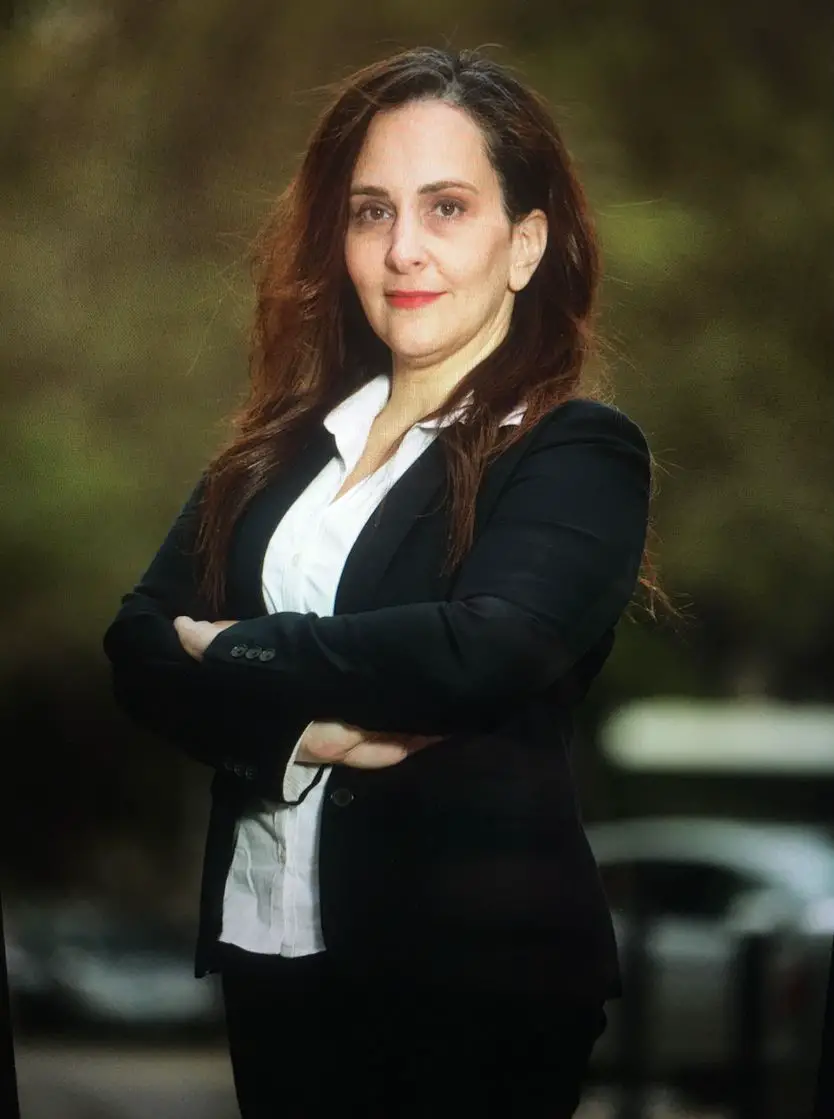
Nancy Abdelhadi, a proud Egyptian-American, is a mother to two remarkable children, Nada-Lina and Amr Adam, and a grandmother to identical twin grandchildren, Noor and Amir.
She serves as the Co-founder and CEO of a small Egyptian company specializing in event organization, business development, and destination marketing. Her passion for travel takes her to various parts of the world, with a particular fondness for exploring and promoting destinations in Africa. She is deeply committed to numerous humanitarian causes, especially in the empowerment of women, youth, and differently-abled individuals.
Currently, Nancy holds the position of Executive Board Member at the African Tourism Board and is a member of the Board of Trustees for the UK-based NGO, My Body is My Body (MBIMB). This organization offers a globally recognized child safety program, which has played a vital role in safeguarding countless children worldwide.
2- What is your academic background?
I earned a BA in Political Science from Fairleigh Dickinson University in New Jersey and an MA in Diplomacy and International Relations from Seton Hall University, specializing in Global Negotiations, Conflict Management, International Security, and the Middle East. I also holds postgraduate certificate in Executive Leadership from the American University in Cairo.
3- How old were you when you moved to the US? How long have you been in the US?
A: I was born and raised in the US in a small Illinois town called Dekalb. My parents immigrated to the US from Egypt in the late 1960s. I’ve lived in the U.S. for most of my life and relocated to my national homeland, Egypt, in 2016 and have been living between the US and Egypt ever since.
4- Can you share a bit about your parents’ journey from Egypt to the USA? What motivated them to move to the USA? What were some of the challenges they faced during this transition?
A: My maternal uncle, Dr. Autif, and his German wife Margaret, were the first in our family to come to the U.S. My uncle came on a scholarship from Egypt to pursue his PhD at Princeton University. After completing his degree and settling in Illinois, he sponsored his siblings, including my mom, to join him in the U.S. My parents immigrated from Egypt to Illinois around 1969. It was a challenging time for them, as they were not fluent in English and were unfamiliar with life in their new country. Despite these challenges, my father worked full-time while completing his graduate studies at Northern Illinois University, supporting our family and adjusting to life in a new country. Meanwhile, my mother worked tirelessly, raising six children and contributing to our family’s well-being as well as holding a full-time job.
Around 1975, my parents relocated from Illinois to New Jersey, where my father started working with my other maternal uncle, Dr. Hussein, at Fairleigh Dickinson University in Madison. They purchased their first home in a small town called Mendham and split their time between New Jersey and Egypt. My father passed away on June 1, 2020, in Egypt, and my mother passed away on January 28, 2024, surrounded by her children and grandchildren in the U.S.
5. What aspects of Egyptian culture do you maintain or celebrate while living in the USA?
A: My family enjoys Egyptian food most of the time, we enjoy Egyptian movies and soap operas and enjoy following the news about our native homeland. We celebrate Islamic holidays almost the same way it’s celebrated in Egypt. We speak Arabic at home and meet up with family regularly to keep the tradition alive. Our weddings and special occasions are traditionally Egyptian. My family also loves attending concerts when Egyptian singers or performers visit the U.S.
6- Tell us about your kids. Do they speak Arabic?
A: I have two children. Nada-Lina is 28 years old, and a Board-Certified Behavioral Analyst who works with people on the spectrum including those who are autistic. Amr Adam is 26 years old and is still pursuing his education. Both of my children understand and speak good Arabic but their reading and writing skills are limited. They both love visiting Egypt and attended the World Youth Forum which gave them an opportunity to meet with other youth from Egypt and around the world.
7- What were the greatest challenges, if any, that you faced in raising them, in school, sports, playgrounds?
A: My significant challenge in raising my children mirrored the challenges my parents encountered when raising children in two distinct societies with different cultures. As a child, I was never permitted to have sleepovers at friends’ houses. My parents aimed to shield me from aspects of American society that conflicted with our Muslim Egyptian values. For instance, in American culture, it’s common to move out at 18, but in Egyptian culture, it’s more customary for single individuals to live with their parents well past 18 and even until married. Both my brother and I received additional academic support during elementary school since we spoke Arabic at home and were bilingual. However, this wasn’t necessary for my children when they were young. The notion of being bilingual was no longer viewed as a disadvantage for young people. They considered it an advantage for children to learn more than one language at a young age.
8- What do you do to make your kids proud of the Egyptian heritage?
A: The main thing that helped my children connect with their Egyptian identity and feel proud of who they are was the frequent trips to Egypt and even the time we spent living there while they were young. I also took my children to family and community events like weddings and other celebrations that included Egyptian music, food and other festivities. They are very proud of their Egyptian identity and heritage.
9- Do you feel it is important to maintain the Egyptian identity/heritage? If the answer is yes, what do you do to achieve that?
A: Maintaining my Egyptian identity holds significance as it defines my sense of self – answering the question of “who am I”. It provides me with a profound sense of belonging and enables me to culturally connect with my immediate and extended family, as well as with fellow Egyptians worldwide. The most effective way to nurture this connection is by remaining receptive to learning about our heritage and partaking in the celebration of our traditions, including cultural and national festivals. Additionally, embracing elements like food, music, dance, and commemorating holidays serves as a meaningful way to preserve our cultural identity. Engaging with the Egyptian community, both in the US and during visits to Egypt, and actively learning and using the Arabic language are valuable avenues to strengthen that connection. It’s equally crucial to share our culture with others, including our children and friends, and to embrace and appreciate the richness of our multiculturalism. Through profound self-awareness, we cultivate a genuine appreciation for our identity by delving into our roots and understanding the narratives behind our heritage.
10- Do you watch Egyptian television?
A: I enjoy watching Egyptian movies and TV Shows, especially during Ramadan.
11- Do you cook Egyptian food?
A: I take pleasure in preparing Egyptian dishes such as Macaroni Bechamel, Fool, and Goulash with Spinach and Cheese. In my opinion, Egyptian cuisine stands out as one of the finest globally. Despite the straightforward preparation of many dishes, they are bursting with flavors that truly make them exceptional.
12- Do you celebrate Egyptian holidays? �
A: My family celebrates many Egyptian and Muslim holidays including Eid ul Fitr and Eid ul Adha.
13- Do you often visit Egypt? Do your family members from Egypt come to visit?
A: I live between Egypt and the US and my children and other family members visit Egypt quite often including during holidays and summer vacations. Several family members from Egypt visit the US mostly during the summer.
14- Describe your feelings when you see the Egyptian flag, or hear the Egyptian anthem, or music.
A: I feel extremely proud and patriotic when I see the Egyptian flag, hear the Egyptian national anthem or listen to Egyptian music. Since I was born and raised in the US, I also feel happy when I see the U.S. Flag, hear the national anthem, or listen to American Music. This is the benefit of being connected to two different cultures. I feel very fortunate to be both American and Egyptian.
15- Can you share (story, moment or event) about a time when you felt particularly empowered/proud/ or inspired as an Egyptian woman living in the USA?
A: Since moving to Egypt, I’ve developed a stronger sense of belonging and connection to my Egyptian heritage. Growing up in the U.S. as an Egyptian Muslim woman, I faced discrimination and bullying in a small town where my family was among the few Arab, Muslim, Egyptian, or immigrant families. It was challenging not to fit in and feel like an outcast.
As I matured and traveled to Egypt and other parts of the world, I came to appreciate my Egyptian roots more deeply. Learning about Egypt’s rich history and the remarkable contributions of ancient Egyptian civilization filled me with pride. I began to see my uniqueness as a strength.
I distinctly remember the impact of the song ‘Walk Like an Egyptian’ by the Bangles in the 1980s—it was a moment when Egyptian culture became cool in America, and it felt validating. Looking back, I’ve come to realize that beyond pop culture, there are numerous reasons to take pride in being Egyptian.
In particular, I admire Egyptian-Americans like Dr. Farouk El-Baz, a NASA scientist and geologist, Mohamed El-Erian, CEO of Harvard Management Company, Hoda Kotb, a prominent TV presenter, and Farida Osman, an Olympic swimmer, among others. Their achievements reflect the talent and potential of the Egyptian diaspora and inspire me with pride in my heritage.
Being honored at the Egypt Can Conference, with thirty other amazing Egyptian expat women, who have accomplished so much in their lives was a great moment for me and during that time, I also felt so proud to be an Egyptian woman.
16- What are some of the biggest differences you’ve noticed between life in Egypt and life in the USA?
A: There are significant differences between life in Egypt and life in the US, particularly in terms of work-life balance. In Egypt, people prioritize socializing and enjoying life alongside work. They regularly visit family, social and sports clubs, and attend weddings or celebrations. Leisure time is often spent with family and friends at malls, parks, or restaurants, and holidays are taken frequently, even within Egypt if feasible.
In contrast, in the US, holidays and outings are typically reserved for weekends or summer vacations. Americans tend to dedicate more time to work, leaving less time for socializing with friends and family. Although the cost of living is high in both countries, Egyptians often find joy in simple pleasures, like a ride on public transportation and a falafel sandwich, despite limited financial means.
Additionally, Egyptians are known for their friendliness and openness, with casual conversations with strangers being common on trains or in shops—a cultural norm less commonly seen in the US.
17- Have you faced any cultural or societal challenges as an Egyptian woman living in the USA? How have you navigated these challenges?
A: Growing up, I felt like an outcast because my family was the only Egyptian, Arab, and Muslim family in our small town. I struggled to fit in and missed out on typical social activities like parties and sleepovers. My father, despite being incredibly loving and affectionate, could be quite stern during student, parent, and teacher conferences. It was embarrassing because the teachers couldn’t understand him, but they could sense his intensity.
For my father, who immigrated to the US for education and a better life, our schooling was a top priority. He didn’t tolerate any lack of seriousness about education. It was challenging not fully identifying with one culture—I wasn’t entirely Egyptian, nor was I completely American.
18- Can you share a memorable experience that highlights the intersection of your Egyptian identity and your life in the USA?
A: One memorable experience that highlights the intersection of my Egyptian identity and life in the USA occurred during a cultural event at my school. As one of the few Egyptian students, I was asked to share aspects of Egyptian culture with my classmates.
I prepared a presentation featuring Egyptian music, traditional attire, and a few phrases in Arabic. It was heartwarming to see my classmates’ genuine interest and curiosity about Egypt. I felt proud to showcase my heritage and educate others about my background.
After the presentation, many classmates approached me with questions and expressed appreciation for learning something new. This experience reinforced my sense of pride in being Egyptian while living in the USA. It also emphasized the importance of cultural exchange and understanding in bridging differences within a diverse community
19- What accomplishments or successes are you most proud of since moving to the USA?
A: Some of my significant accomplishments and successes that have shaped my journey and enriched my life include my educational achievements. In 1996, I earned a bachelor’s degree in Political Science from Fairleigh Dickinson University (FDU) with academic honors, followed by a master’s degree in Diplomacy and International Relations from Seton Hall University (SHU) in 2009.
Throughout my professional journey, I have gained diverse and enriching experiences across various fields and organizations, including major U.S. companies, diplomatic missions, and international organizations. Whether through internships, employment, or volunteer work, I have accumulated valuable professional experience and made meaningful contributions to my field.
Engaging in community activities and initiatives has also been immensely rewarding. By participating in local events, volunteering, and supporting causes both in the U.S. and Egypt, I have connected with others and positively impacted my surroundings.
One of my proudest achievements is overcoming personal challenges, including being diagnosed with Myotonia Congenita, a rare genetic disorder causing muscle stiffness, raising my children as a single mom, and relocating from the U.S. to Egypt. These experiences have strengthened my resilience and adaptability.
Each of these accomplishments reflects my determination, resilience, and openness to embracing new opportunities. They are milestones that I cherish and that continue to inspire me on my journey of personal and professional growth.
20- Have you encountered any stereotypes or misconceptions about Egyptian women in the USA? How do you address them?
A: As an Arab, Egyptian, and Muslim-American, life in the US was not free of discrimination and throughout my life in the US, I can recall being bullied or discriminated against because of my cultural and religious background. I believe that most times, discrimination comes from ignorance and a lack of knowledge of various cultures or religions. As a child, It was very difficult to deal with the bullying and at times I felt like a bit of an outcast. As I got older, I became more and more proud of my identity and so I didn’t let people’s ignorance affect me.
21- How important is it for new immigrants to integrate into society? From your experience, how can they accomplish that?
A: It is important for immigrants to integrate into their new society as long as they don’t lose their old traditions, culture, and connection to their motherland. The reason why it is important is because it helps them to access resources and benefits from that society including education and if needed government assistance. The best way they can do that is to learn the local language and to also open themselves up to new experiences as well as to network and get to know their local neighbors, coworkers, and fellow students.
22- What advice would you give to other Egyptian women who are considering moving to or are currently living in the USA?
A: The most important piece of advice I can offer is to embrace the multicultural society we have here in the US while maintaining pride in your identity as an Egyptian woman. Be open to the wonderful American cultural traditions and customs that align with Egyptian cultural or religious (Muslim or Christian) values. I encourage you to be proud of who you are and walk confidently, even in the face of discrimination or ignorance.
Lastly, I recommend doing thorough research on the US and American culture before moving here to ease any anxiety about living in a new country.
23- Is there anything else you would like to add, or share about your experiences, identity, or achievements as an Egyptian woman in the USA?
A: My greatest achievement in life has been raising two incredible children as a single mom while pursuing higher education, traveling frequently, and relocating abroad to new parts of the world. I’ve faced my worst fears and started over many times. Life presents challenges, but what matters most is finding the strength to overcome them and pushing forward, no matter what.
While a good education, upbringing, and acquiring life and career skills are vital for success, true success, in my view, lies in how we treat others we encounter, regardless of their circumstances. Making a real difference in someone else’s life defines success. Achieving this requires balancing worldly priorities and connections with a deeper spiritual perspective and preparations for the eternal world.
Defining oneself through self-reflection transcends cultural barriers. Although I take pride in my Egyptian identity, I value all cultures equally. Growing up Egyptian instilled in me a sense of responsibility, friendliness, humor, hospitality, and generosity. I cherish the blend of spices in Egyptian food and the lively music and dance that reflect our cultural heritage.
 Women of Egypt Network