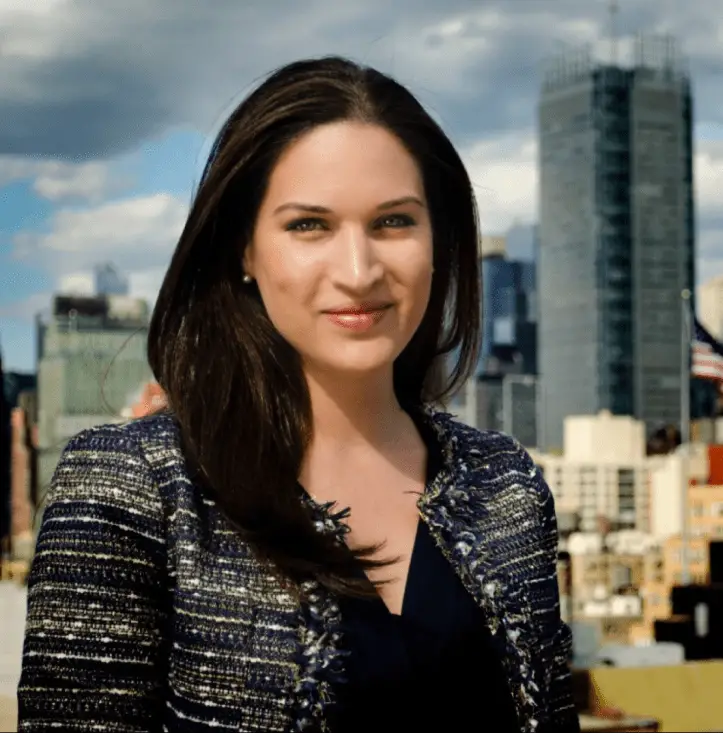
Nada Tawfik is an award-winning and Emmy nominated journalist with more than 20 years of experience in the news industry. Currently, she is the BBC’s New York and UN correspondent, responsible for covering some of the biggest stories of the era in politics, diplomacy, and social justice across all platforms and social media. She also used to also regularly present the program World News America, which also airs on PBS.
My career has taken her across the US, and internationally as well, including to Cuba, Mexico, Canada, and Jamaica. She reported from key states during the last 3 presidential and midterm elections, from United Nations headquarters during the most pressing international crisis, and from New York courts for some of the most consequential trials of the decade including those against former president Donald Trump.
She also provided compelling coverage from the scene of numerous breaking news stories and natural disasters, bringing audience the facts and feelings of communities shaken by gun violence and mass shootings, devastating hurricanes, and police violence.
She often report and produce long-form pieces as well, with a few examples being a podcast on women and the economy during the Covid pandemic and a half hour documentary of the trial of Derek Chauvin for the murder of George Floyd. As a versatile correspondent, she also led the BBC’s coverage of red-carpet events from the Oscars to the Grammy Awards and the Met Gala.
Prior to her current role, she covered business news in New York, co-anchoring with London a half hour program called Business Live. She regularly reported live on financial markets and monetary policy.
1- What is your academic background?
A: I have a Bachelor of Arts from New York University, where I double majored in Journalism and Middle Eastern Studies. I graduated high school with an IB diploma from University Laboratory School in Baton Rouge, Louisiana. Moving to Louisiana from New Jersey was a major culture shock! It gave me a unique opportunity to proudly share my religion and culture with those who had never met an Egyptian before.
2. What aspects of Egyptian culture do you maintain or celebrate while living in the USA?
A: Our family makes a big celebration out of Eid Al-Fitr and Eid Al-Adha. Our community has a prayer in the park and our families spend the day together eating and taking the kids to do activities. Our family weddings and celebrations are also a joyous opportunity for us to play and dance to Egyptian/Arabic music. We always say that there’s nothing as fun as an Egyptian wedding!
3- Tell us about your kids? Do they speak Arabic?
A: I have two children: Lana, 12 and Jude 8 years old. They are taking Arabic lessons, but do not speak fluently.
4- What were the greatest challenges you faced in raising them, in school, sports, playgrounds?
A: The greatest challenge is trying to balance career and the kids’ extra curriculars. I want to make sure I’m giving my children every opportunity and skill to grow up as well-rounded, confident adults. At the same time, I want to succeed in my industry because I understand the power of seeing diverse women on air. I want to be a role model for my children and other Egyptians.
5- What do you do to make your kids proud of the Egyptian heritage?
A: New Jersey has a large Egyptian community and I try to make sure my children feeling connected to it and feel proud of their heritage. I made sure they both went to the masjid on Sundays to learn about their religion, their language, and to meet other children with the same culture. We have a large group of Egyptian friends, and we all get together, especially on special occasions.
6- Do you feel it is important to maintain the Egyptian identity/heritage?
A: Yes, it is incredibly important to me to maintain my Egyptian heritage. We have to honor where we came from in order to appreciate and understand our own identity. I try to visit Egypt every few years, and I’m always talking about how beautiful the country and its people are.
We don’t watch Egyptian TV as often as I would like, though my husband and I have started watching some of the new modern shows now that they’re available on Netflix.
7- Do you prepare Egyptian food?
A: Yes! There is nothing more comforting and reminiscent of childhood than having a homemade Egyptian meal. I love to cook bemya, molokhiya, kooshari, grape leaves, gulash both sweet and savory, and ful with tomatoes for breakfast.
8- Do you often visit Egypt? Do your family members from Egypt come to visit?
A: My parents, who moved to America when they were young, made sure we visited our country to see family, but also to see the beautiful sites. We toured all over Cairo, Luxor and Aswan, the North Coast, Sokhna, Hurgada, Alexandria, and Mansoura. I have the most amazing memories of spending summers in Mamoura in Alexandria with my grandparents. I found everything fascinating – from the man who sold teen shawky (prickly pear) every morning, to the scenes at the beach and the athan sounding out. I love being immersed in the culture and Arabic language spoken all around. I travel back now with my kids to visit my parents, to pass on the tradition I grew up with.
9- Describe your feelings when you see the Egyptian flag, or hear the Egyptian anthem, or music.
A: I feel excitement – it always puts a smile on my face and I do get a sense of national pride even though I am an Egyptian American and wasn’t born in Egypt.
10- Can you share (story, moment or event) about a time when you felt particularly proud and empowered as an Egyptian woman living in the USA?
A: I think for sure at the height of the Arab Spring, as a young journalist, there was an intense feeling of pride during the Egyptian revolution. My friends and I were glued to social media and the news for any and all updates. It’s always inspiring to see the power of people gathering together in protest against corruption and autocracy.
11- What are some of the biggest differences you’ve noticed between life in Egypt and life in the USA?
A: Life in the United States feels dominated by work, while in Egypt it feels like there’s a better balance with personal life. I have family members in Egypt that meet to have lunch all together and prioritize time together.
12- Have you encountered any stereotypes or misconceptions about Egyptian women in the USA? How do you address them?
A: I’ve had to counter numerous stereotypes about Egyptian women being subservient or denied rights. While every nation can do better when it comes to women’s rights, I always proudly say that Egyptian women are incredibly strong, passionate, and selfless. The best way to counter stereotypes, I find, is to live by example and to lift the women and men in our community in any way we can.
 Women of Egypt Network
we have always enjoyed following Nada’s commentaries on BBC NEWS. It enlarges our world to see women like her in the news media.
kmscallon@ yahoo.com
LikeLike