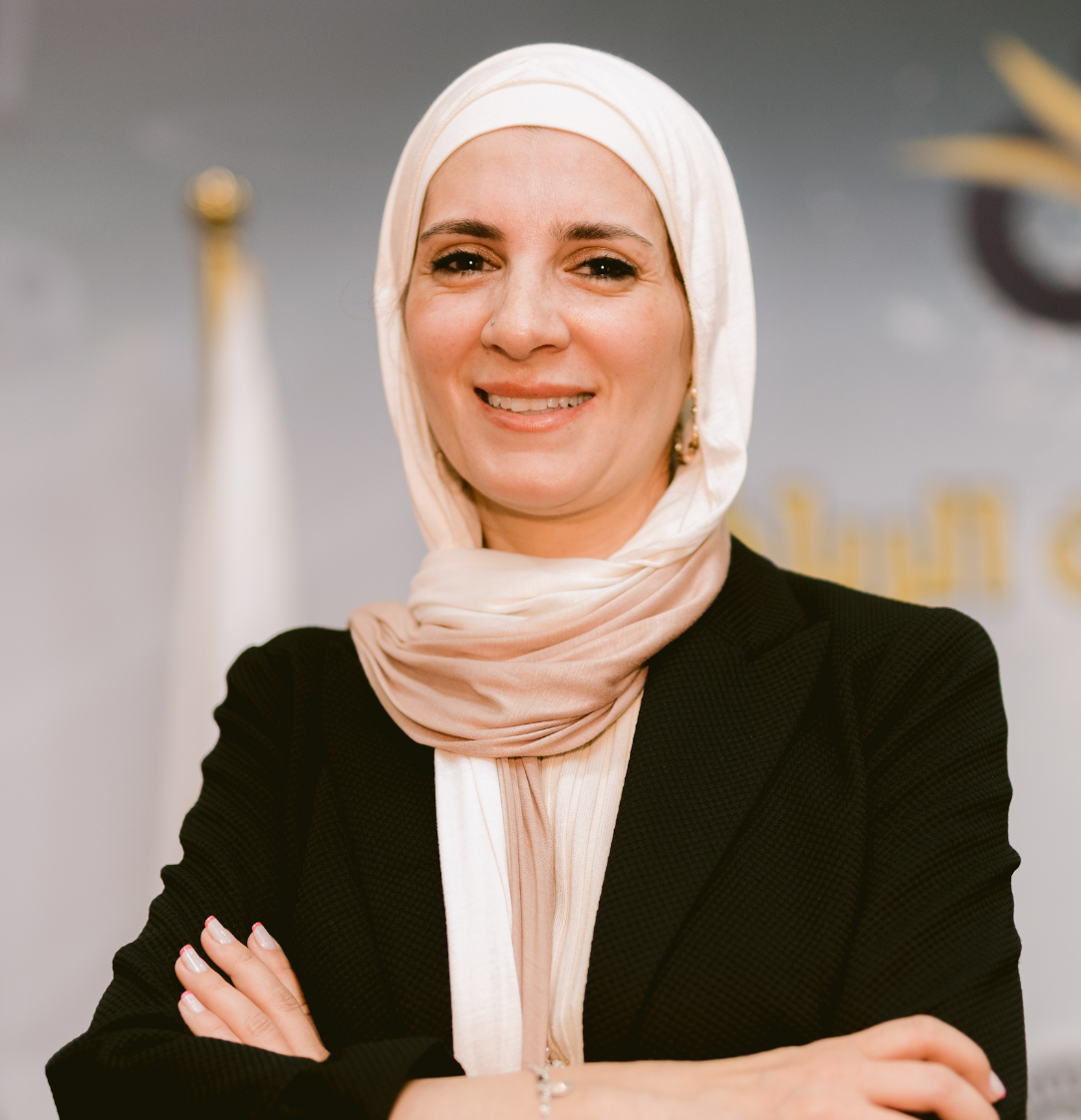
Jasmin Samy is a Partner at the Washington for International Development Consultancy firm, based in Seattle. In 2018, and after a long career in the development field, she decided to pursue sports entrepreneurship, specifically Squash which she played as a junior in Cairo.
She started a company that manages sports academies and events, becoming the first female entrepreneur in sports and partnering with world-renowned squash coach Emad Kouritam.
The company manages one of the largest squash academies in Cairo—Shadow Squash Academy, a leading center for squash training, mental coaching, and squash fitness.
Jasmin aims to invest in Egypt and pave the way for other women entrepreneurs in sports. She also seeks to encourage women and young girls to play sports. To achieve these goals, the academies are expanding into other governorates and forming partnerships with affiliated academies in the US.
Wife and a mother of two, Jasmin holds a Master of Laws from Indiana University and was a TEDx speaker at University of Washington. She spends her time shuttling between Seattle, Cairo amongst other destinations.
Jasmin moved with her husband to the USA 12 years ago, and has been living there since then. Their choice to relocate was driven by their desire to expose their then four-year-old son to life abroad, introducing him to diverse cultures, and offering him the possibility of having multiple homes across the world.
About the biggest difference she noticed between life in Egypt’ and in the USA, Jasmin said, “There are many differences between any two countries for sure. Take Egypt, for instance, where family holds significant value, with parents and children often residing together. In contrast, in the USA, there’s a societal expectation for young adults to establish independence after college. Moreover, I appreciate the emphasis in the US on teenagers contributing financially to their expenses, irrespective of their economic status, a practice not traditionally observed in Egypt until recently. In addition, education systems are very different with each having its strengths and weaknesses.”
In the USA, Jasmin and her family maintain and celebrate their Egyptian culture as much as possible. “We have continued to maintain our Egyptian culture with our children. We hardly missed a summer without coming to spend some time with family and friends, and we speak Arabic only at home.”
Jasmin has a 16-year-old son and an 11-year-old daughter. They both speak Arabic and take Arabic and Quran classes weekly. They also speak fluent French and Spanish, having attended the French School in WA.
The greatest challenge in raising her children was balancing their culture with their new surroundings while ensuring they remained proud of who they are and their background.
To make her kids proud of their Egyptian heritage, Jasmine discusses openly the pros and cons of each country and emphasizes the importance of being a source of support to the community around them, no matter where they are. “Regular trips to Egypt and observing the positive aspects have helped immensely,” she says.
She believes it’s important to maintain the Egyptian identity. She watches Egyptian TV regularly. “Nothing beats Egyptian Humor,” she says. She always prepares Egyptian food for her family. The family celebrates the Eid with the Muslim community in the USA, but not other Egyptian holidays as it’s hard to get time off work.
The family travels to Egypt every summer, and Jasmine travels more to Egypt for her sports business and her work with projects related to the international development. When she see the Egyptian flag, or hear the Egyptian anthem, or music, she remembers her home, family, grandparents, and the suburb of Maadi, where she grew up.
Jasmin says that in various instances, during events or interactions with others, she has experienced a profound sense of pride—not solely for being a woman, but specifically as a woman hailing from a culture often misrepresented by prevailing media narratives. “These moments arise, for instance, when my children excel in school, sports, or in their friendships, reflecting our family’s unwavering dedication to ethical values in all endeavors. Moreover, considering our rich historical heritage and the positive contributions we’ve made across numerous domains, along with my own ability to navigate challenges and achieve success, further deepens this sense of pride as an Egyptian/American woman.”
She admits that she has faced cultural and societal challenges as an Egyptian woman living in the USA. “ Most of the time, I am not considered a US citizen and am perceived as unable to speak English proficiently, even though my English is as fluent as a native speaker’s due to my education. This is coupled with the stereotype that I come from a country where living in pyramids and riding camels are commonplace.”
When encountering stereotypes or misconceptions about Egyptian women, Jasmine “approach(s) them with respect, recognizing the significant influence the media has had in shaping public perceptions of Egypt and Egyptian women in particular. If the individual(s) show willingness to cultivate a deeper understanding, I seize the opportunity to engage in meaningful dialogue, addressing any misconceptions they may hold.” She explained.
Among her many accomplishments, Jasmin is most proud of building her career in international development and starting Washington for International Development LLc. Being the first Egyptian woman to co-found Shadow Sports Academies in Egypt focusing on Squash and Padel, with three branches in Cairo. “I am also proud to give a positive image of Egyptian women and our upbringing. Our high educational standards and ethics,” she adds.
She believes it is very important for immigrants to integrate in the community while maintaining their identity. It is not easy but can be achieved. At the end of the day, it is a choice.”
To Egyptian women who are considering moving to or are currently living in the USA, Jasmin advises them to understand the community around them and accept different cultures while maintaining their own identity. “ Be proud of your country. Be proud to be a woman, regardless of your background or current citizenship. We deserve the best and should encourage other women to believe in themselves and accomplish their dreams wherever they go,” she concludes.
 Women of Egypt Network