August 12, 2026
By: Audrey Choi
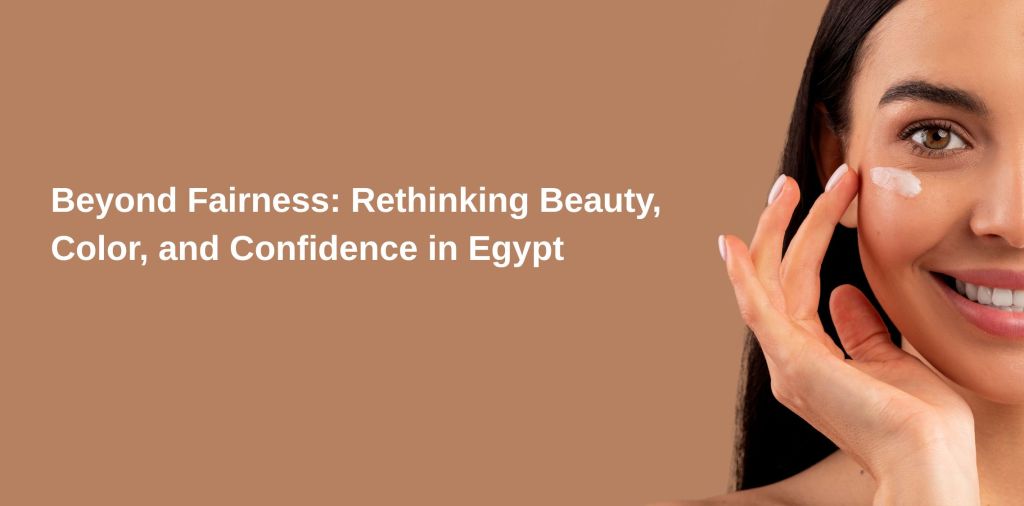
If you walk through any pharmacy, beauty store, or scroll through social media in Egypt, you are likely to encounter products promising brighter, lighter, or more radiant skin. These products are part of a global skin-lightening market that continues to grow across Africa, Asia, and the Middle East, reflecting the widespread demand for lighter skin tones (United Nations Environment Programme [UNEP], 2025).
Why has lighter skin become something so many women feel they should strive for? Experts describe colorism as the preference for lighter skin tones within the same ethnic or racial group. But colorism is different from racism. Unlike racism, which occurs between different racial groups, colorism operates within communities. Communities tend to be tighter-knit and with the rise of social media, word of mouth and perceptions of beauty, social status, employment opportunities, and marriage prospects circulate even faster than before. According to the United Nations Environment Programme, demand for skin-lightening products is rooted in historical, cultural, and social factors, while media and advertising often reinforce the idea that lighter skin is more desirable (UNEP, 2025).
Egypt has always been home to an extraordinary diversity of skin tones, reflecting its rich history and geography. Yet many Egyptians have observed that television, advertising, beauty campaigns, and social media frequently feature lighter-skinned models and actresses, contributing to narrow beauty ideals. While individual experiences differ, discussions about colorism have become increasingly visible through public conversations and social media, encouraging greater reflection on how beauty standards are formed.
The beauty industry has responded to these “ideals” by promoting products described as “brightening,” “whitening,” “radiance,” or “even skin tone.” Some of these products are appropriate medical treatments for conditions such as melasma or post-inflammatory hyperpigmentation when prescribed by a dermatologist. However, many are marketed for cosmetic skin lightening, encouraging consumers to alter their natural complexion rather than treat a medical condition (World Health Organization [WHO], 2023).
For many women, purchasing a skin-lightening cream is about much more than appearance. It may reflect a desire to feel more confident, meet social expectations, or align with beauty standards that have been reinforced over many years. Understanding these pressures reminds us that this issue is not simply about individual choice but also about the cultural messages women encounter throughout their lives.
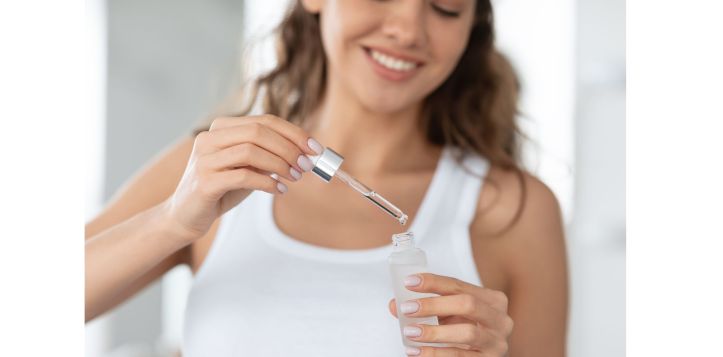
Many of these products are widely available in pharmacies, supermarkets, and online retailers. They are promoted as helping reduce the appearance of dark spots, hyperpigmentation, or uneven skin tone, while others are marketed more broadly as skin-lightening products.
Although products intended to treat medically diagnosed pigmentation disorders can have a legitimate dermatological purpose, marketing that equates lighter skin with enhanced beauty or confidence contributes to ongoing discussions about colorism and the beauty standards promoted to women.
Health experts have also raised significant concerns about the safety of some skin-lightening products. The World Health Organization warns that certain products contain toxic mercury compounds, while others may contain high concentrations of hydroquinone or corticosteroids. Long-term exposure has been associated with kidney damage, nervous system damage, skin discoloration, scarring, and other serious health consequences (WHO, 2019; WHO, 2023; UNEP, 2025).
International organizations have also emphasized that eliminating hazardous skin-lightening products requires more than stronger regulations. It also requires addressing the social beliefs that fuel demand. Public education campaigns, community engagement, and broader representation of diverse skin tones can help challenge the misconception that lighter skin is inherently more beautiful or valuable (UNEP, 2025).
Changing this conversation begins by recognizing that beauty cannot be measured by a single complexion. Egypt’s history has always been one of remarkable diversity, and its women represent a wide spectrum of beautiful skin tones. Every shade reflects the country’s rich cultural heritage, and no complexion is more authentically Egyptian than another.
A Personal Reflection
As a Korean American woman, conversations about skin lightening have never felt distant to me. Growing up, I was surrounded by beauty products marketed as “whitening,” “brightening,” or designed to create the ideal of clear, pale skin. In South Korea, lighter skin has long been associated with beauty, femininity, and social status (a standard reinforced through advertising, celebrity culture, and the global reach of K-beauty).
Over the past decade, however, I have also watched that conversation begin to change. Scholars, dermatologists, journalists, and activists have increasingly challenged colorism, questioning why beauty should be measured by proximity to whiteness rather than by health, individuality, or confidence. Major cosmetic companies have even faced public pressure to remove words like “fair” and “whitening” from their branding, acknowledging that marketing can reinforce harmful beauty ideals, even if changing a product’s name alone does not erase the underlying attitudes.
That experience has shaped how I think about beauty standards elsewhere. Although Egypt has its own history, culture, and understanding of beauty, the questions feel strikingly familiar. When advertisements consistently portray lighter skin as more desirable, when cosmetic products promise transformation through a lighter complexion, and when women feel pressure to alter their appearance to meet social expectations, the issue extends beyond skincare. It becomes a conversation about identity, belonging, and self-worth.
As someone who has witnessed these conversations unfold in both Korean and American contexts, I do not believe the answer is to criticize women for using skin-lightening products. The real question is why women around the world continue to be told that their natural skin tone needs improvement. Whether in Seoul, Cairo, or New York, women deserve beauty standards that celebrate the diversity of their complexions rather than treating one shade as the ideal.
Bibliography
United Nations Environment Programme. (2025). Eliminating Mercury Skin Lightening Products.
United Nations Environment Programme. (2025). Mercury in Skin Lightening Products.
https://www.unep.org/globalmercurypartnership/resources/report/mercury-skin-lightening-products
World Health Organization. (2019). Mercury in Skin Lightening Products.
https://www.who.int/publications/i/item/WHO-CED-PHE-EPE-19.13
World Health Organization. (2023). Countries Unite to Remove Mercury from Hazardous Skin Lightening Products.
https://www.who.int/news/item/14-02-2023-countries-unite-to-remove-mercury-from-hazardous-skin-lightening-products
World Health Organization. Elimination of Mercury-Containing Skin Lightening Products.
https://www.who.int/initiatives/elimination-of-mercury-containing-skin-lightening-products

